Financial Therapist Aja Evans Offers Tips for Navigating Money Conversations With Your Family
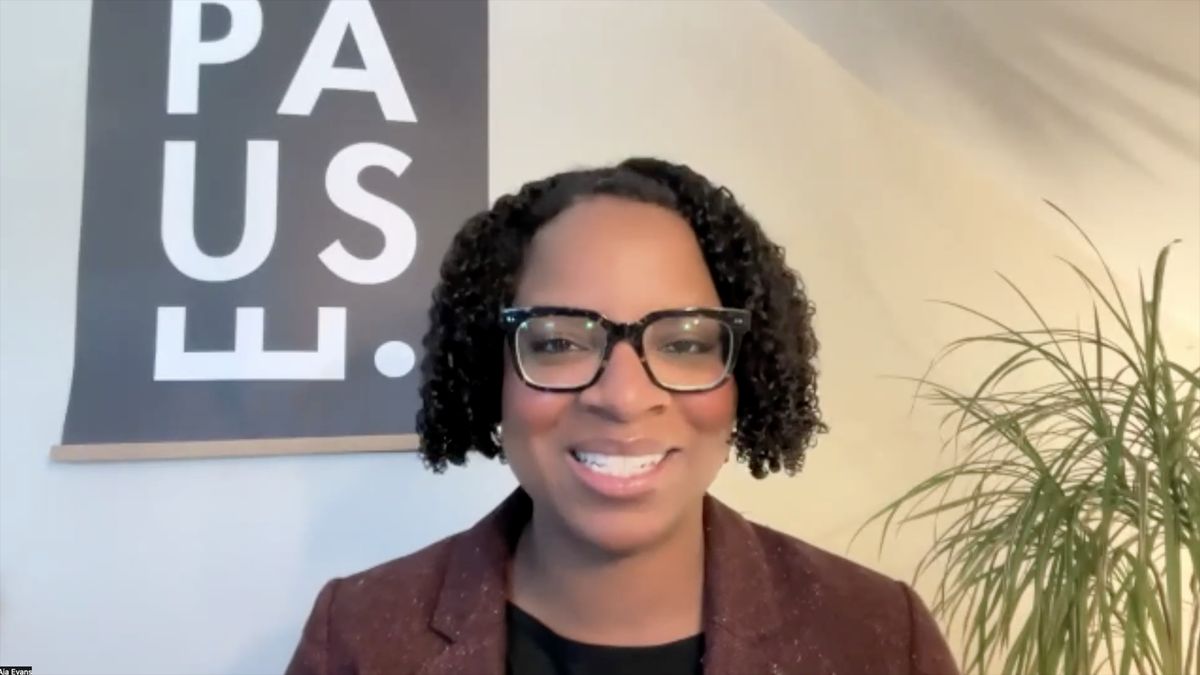


As a licensed mental health counselor and financial therapist, Aja Evans has dedicated her career to helping people understand how their personal relationships with money shape how they feel about themselves and others.
Based in New York City, Evans has worked in the mental health industry for over a decade. In her practice, she helps clients work through questions about how emotions shape financial behavior. She’s also the current president of the Financial Therapy Association and the author of, “Feel Good Finance: Untangle Your Relationship with Money for Better Mental, Emotional, and Financial Well-Being.”
Evans recently joined Jennifer Borget, host of our A Better Way to Money® podcast, to discuss the complicated link between feelings and finances and why it’s important to focus on your values—especially when you’re feeling a bit overwhelmed with big life changes. Below she shares why financial conversations are so important and tips for navigating them successfully.
Since financial therapy is a relatively new field, let’s start there: What is a financial therapist?
A financial therapist takes the time to explore your relationship with money: how you think, how you feel and how you behave financially. I start with: How have your past experiences impacted what you're doing with your money today? My private practice focuses on people's relationships with money and how their money, emotions, beliefs and narrative impact what they do with their finances and how they move through the world of money in general. It’s important to dig into the nitty-gritty of the emotions that come up for people during financial conversations. Money can be really hard to talk about, especially if you have kids, and it can be difficult to find dedicated time to work through these conversations with your whole family.


Want more? Get financial tips, tools, and more with our monthly newsletter.
When is a good time for a couple to start having money conversations?
When you realize that you're getting serious. This could be when you’re talking about moving in together or about getting engaged—it’s when you start thinking about what you want your life together to look like. You both need to be clear about what you want in terms of your expectations and lifestyle. It’s a really exciting time to dream about what the two of you can create together—because I also want to make sure that you're taking care of your future selves as well.
The right time is also when both parties feel comfortable having these conversations. If you’re off balance, that can lead to bumps in the road. You're in this together as a team trying to accomplish common goals.
A good plan is built on your values
Use this worksheet to help define your goals. Then, discuss what’s important to you with your partner and your financial advisor to build a plan on what really matters to you.
What action would you recommend for a couple that is not only struggling to adjust to a new monthly budget after having kids but is also disagreeing on whether they should prioritize saving for their kids' education or for a down payment on a bigger house?
I would start by saying: Relax and breathe. Don’t make any financial moves when you are stressed out, tired or feeling overwhelmed. I know this is something that's really important for you right now, and I am not disagreeing with that. But there’s a temptation to try to move yourself out of this discomfort and into a place of action as quickly as possible. Resist the urge. You don't want to do anything when you are really stressed out.
When you are feeling calmer, schedule a money date when you both know that you will have limited distractions. Then you can talk about what your financial goals are and align your priorities. Don't feel that you need to do all of it immediately. Getting on the same page together will allow you to move forward with the steps that you're going to take in your financial plan.
It might feel uncomfortable in the beginning because it's new. It’s important to communicate and understand that you're coming from two different money stories and why one goal feels more important to you than another. We don’t talk about money in depth in that way enough.
Then celebrate the fact that you have made the plan and are taking the steps—no matter how small they are. Everything from saving an extra a hundred dollars this month to paying off debt or saving for a home or college education is worthy of celebration. Celebrating your wins can really help you stay motivated to stick to your plan.
Make planning a family affair.
Your advisor will get to know your family and can help you build a comprehensive financial plan. The plan will help protect all of you—and grow your wealth.
Let’s get startedYou’ve talked a lot about financial fidelity in your work. A recent survey from Bankrate found that 42 percent of U.S. adults who are married or living with a partner said they've kept a financial secret from their significant other. Why do people keep money secrets from their partners?
Money and the emotions tied to it can be really hard to talk about. Being vulnerable can really be difficult for some people, so it's important to recognize that this is kind of uncomfortable and that's OK. It doesn't mean we avoid it; it means we need to communicate more around this and financial infidelity. Achieving financial fidelity requires having deeper, honest conversations about all the parts of your money life.
You do not want money to be a reason why communication is breaking down because that's when you start to butt up against, “Hey, you hid this from me,” or “I didn't know that this was going on.” That may lead you to wonder, “What else don't I know?” And that’s when trust can really start to break down.
I advocate for honest, frequent communication, which might sound like:
- “I didn't know about this debt. Why did you keep it from me?” or
- “I can't believe this. What's going on?”
And that's really when you share an “I” statement to respond in the best way:
- “I felt really insecure about it.”
- “I'm embarrassed.”
- “I have a lot of guilt.”
My clients have shared their shame about feeling they should've managed their money better. The best way to tackle it is by communicating consistently and by being transparent.
Decide what to talk about every month. For some people, it may be tackling debt and then bolstering savings with the money that you were putting toward debt. Others may want to do a little bit of both at the same time. The most important part in these conversations is getting back on track and knowing that nobody wants to create these little fractures in a marriage. And sometimes that requires being vulnerable.
Is there anything else you want to add?
One thing I stress to people is that you're not alone. A lot of people assume that everybody knows what they're doing with their finances. That is not the case. There are a ton of people who want to understand themselves and their relationships with money better.
Aja Evans is not affiliated with Northwestern Mutual and the views expressed by Aja Evans do not necessarily represent those of Northwestern Mutual or its subsidiaries.